

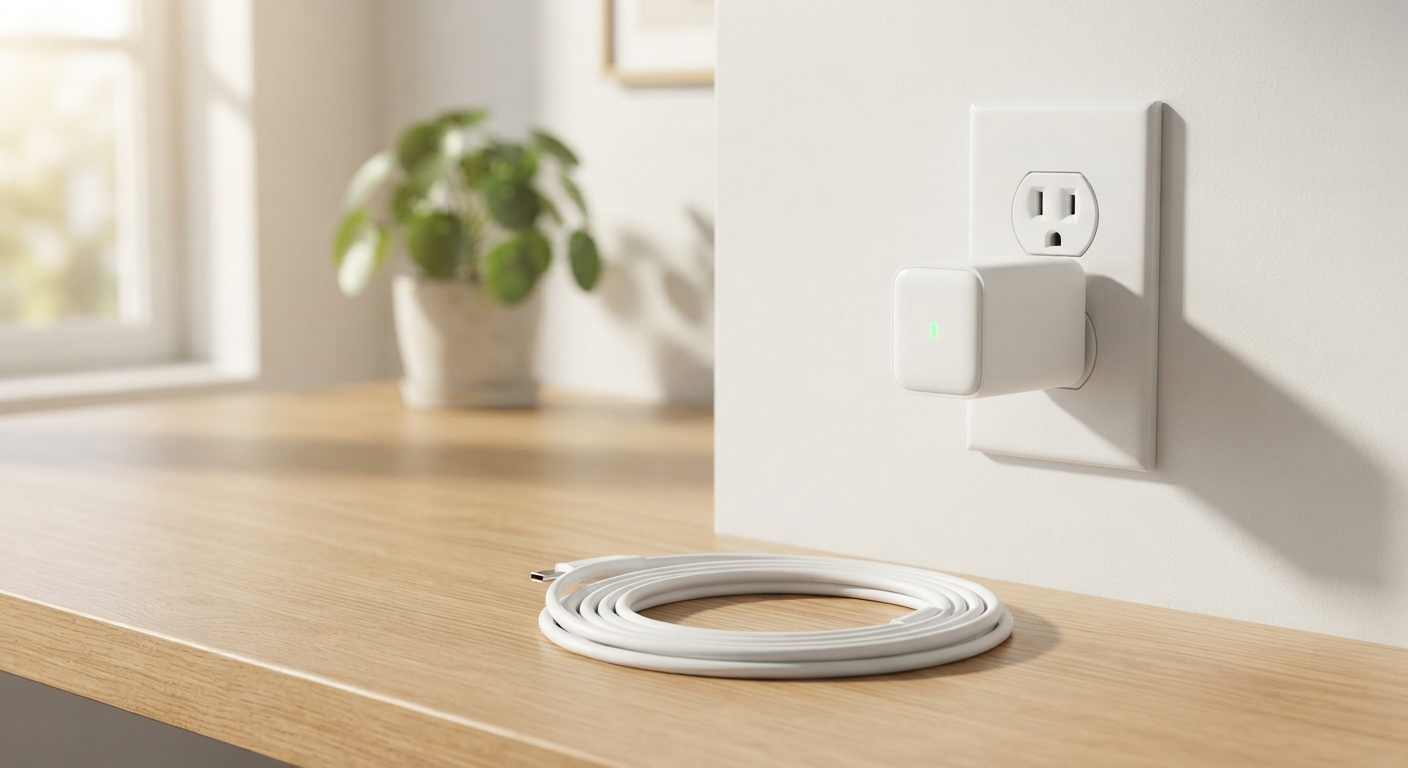
In our modern digital lives, the average household is filled with rechargeable devices. From smartphones and wireless earbuds to laptops and fitness trackers, keeping our tech powered up is a daily chore. To make this process convenient, most of us have developed a common habit: we leave our chargers plugged into the wall 24/7, ready to be used at a moment’s notice.
But does leaving a phone charger plugged into the wall with no device attached actually consume electricity? And more importantly, is this habit quietly inflating your monthly power bill? In this guide, we will uncover the truth behind charger energy consumption and share practical tips to power your devices as efficiently as possible.
1. The Reality of “Vampire Draw” in Chargers
The short answer is yes: a charger left plugged into the wall without a device attached does consume electricity. This phenomenon is known as “vampire draw” or “idle current.”
To understand why this happens, you have to look inside the charger itself. A standard wall charger contains a small internal transformer that converts the high-voltage alternating current (AC) from your home’s wiring into the low-voltage direct current (DC) that your smartphone battery needs. As long as the charger is physically connected to the wall socket, this internal circuit remains open and active, continuously drawing a tiny fraction of power.
2. How Much Does Idle Charging Actually Cost?
Individually, a single modern smartphone charger left plugged in 24/7 draws a very small amount of power—usually less than 0.1 watts. Over the course of an entire year, that single charger might only cost you a few cents.
However, the real issue is accumulation. Look around your home. You likely have laptop chargers, tablet chargers, electric toothbrush bases, and smart speaker adapters constantly plugged in across multiple rooms. When you multiply that tiny vampire draw by 15 or 20 different chargers running continuously for 365 days, the wasted energy becomes significant. Furthermore, from an environmental perspective, millions of homes wasting even a small amount of electricity contributes heavily to unnecessary carbon emissions.
3. The Efficiency of Modern vs. Older Chargers
Not all chargers are created equal when it comes to energy efficiency. Older charging blocks (especially those manufactured over five years ago) are notoriously inefficient. They lack modern smart-chips and often bleed a significant amount of electricity as heat, even when idle. If a charger feels warm to the touch when nothing is connected to it, it is actively wasting your money.
To stop this energy leak, it is highly recommended to replace outdated charging blocks with modern, energy-efficient USB Chargers & Adapters. High-quality, modern adapters are built with advanced semiconductors (like Gallium Nitride or GaN) that operate at a much higher efficiency rate. They detect when a device is fully charged or disconnected and automatically drop their power draw to near zero, effectively stopping vampire energy loss.
4. Stop Overcharging: Save Energy and Your Battery
Another major source of energy waste is the habit of leaving smartphones plugged in overnight. Modern phones only take about two hours to reach a 100% charge. If you sleep for eight hours, your phone spends six hours drawing “trickle power” to stay at 100%, constantly engaging and disengaging the charging circuit.
Not only does this waste electricity, but it also degrades the chemical health of your lithium-ion battery over time. For maximum energy efficiency and battery longevity, try to charge your phone during the day or the evening, unplugging it once it reaches 80% to 90% capacity.
5. Centralize Your Charging Stations
Instead of having individual charging blocks scattered across every wall socket in your house, consider creating a centralized charging station. By plugging a multi-port USB hub into a single power strip, you can charge your phone, smartwatch, and tablet all in one location.
This approach makes it incredibly easy to manage your power consumption. When all your devices are done charging, you can simply flip the physical switch on the power strip to instantly cut the electrical connection to the entire charging hub, completely eliminating any possibility of vampire draw.
Final Thoughts on Charging Efficiency
While an idle phone charger won’t single-handedly bankrupt you, optimizing how you power your devices is a crucial step in building an energy-efficient home. By upgrading to smart adapters, unplugging older chargers, and centralizing your charging stations, you can easily reduce electrical waste. Small changes in daily habits not only save money on your utility bills but also contribute to a greener, more sustainable planet.