

When homeowners think about energy efficiency, their minds immediately jump to solar panels, high-efficiency refrigerators, or extra attic insulation. While these are excellent investments, they often require thousands of dollars upfront. However, one of the most effective and overlooked methods for reducing your monthly electricity bill is hidden right inside your walls.
Your home’s basic electrical infrastructure—specifically how you control the flow of power to your lighting and built-in appliances—plays a massive role in your overall energy consumption. Relying on outdated, manual controls inevitably leads to human error and wasted electricity. In this guide, we will explore how upgrading your basic wall controls can automate your savings and eliminate energy waste.
1. The Problem with Traditional Manual Controls
The standard “flip” light switch has remained largely unchanged for over a century. Its biggest flaw is that it relies entirely on human memory. Whether it is a bathroom light left on after the morning rush, a porch light burning throughout the bright afternoon, or a ceiling fan spinning in an empty bedroom, manual switches guarantee that electricity will occasionally be wasted.
Even if a single lightbulb only costs a few cents a day to run unnecessarily, multiplying that waste across a dozen rooms over 365 days results in a noticeably inflated utility bill. To truly optimize your home’s energy usage, you must remove human forgetfulness from the equation.
2. Automating with Smart Sockets and Switches
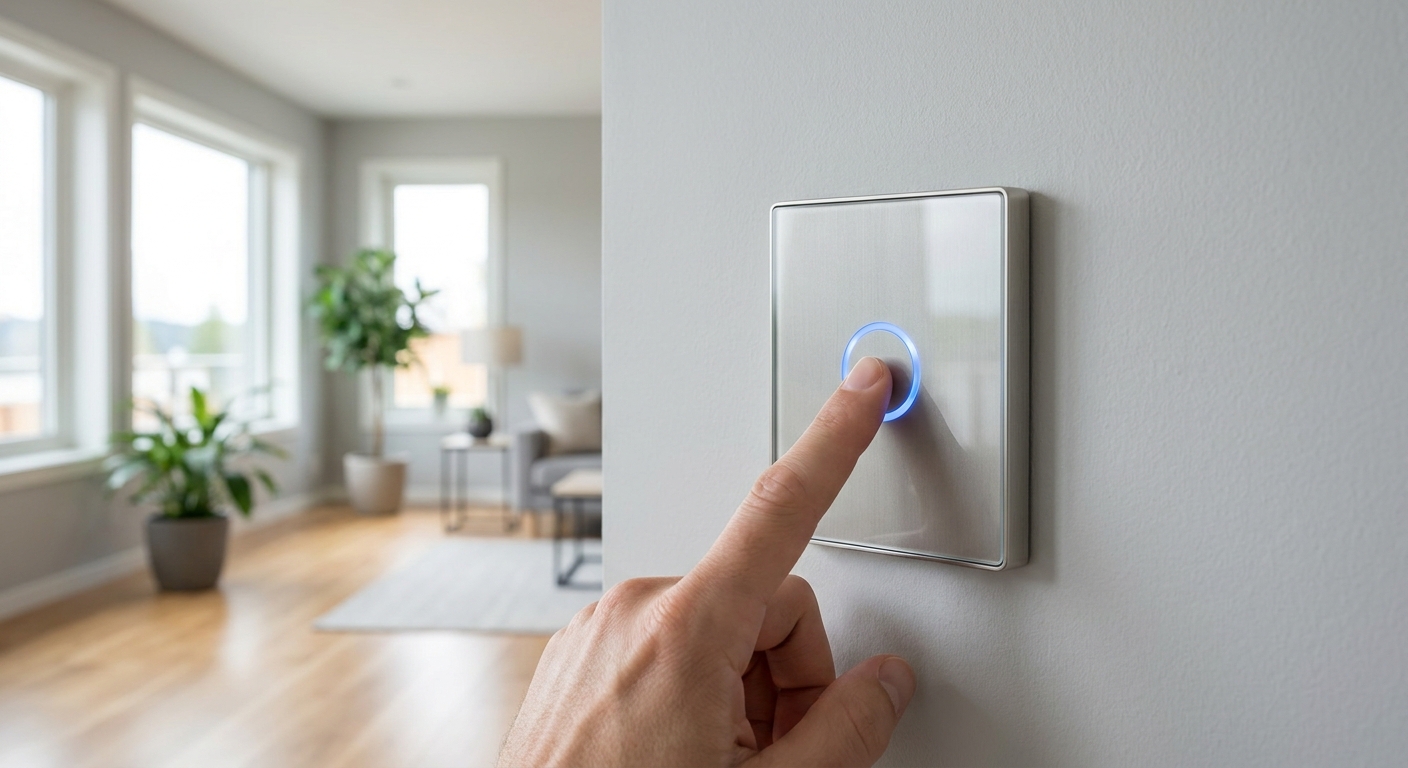
The most impactful step you can take toward an energy-efficient home is upgrading your manual controls to smart technology. Unlike traditional switches that only offer basic “on/off” functionality, smart controls connect to your home Wi-Fi and allow you to program precise schedules.
For example, you can program your exterior lights to sync with the local sunrise and sunset, ensuring they are never on when the sun is shining. By replacing your outdated hardware with modern, programmable Wall Sockets & Switches, you gain the ability to cut power automatically. You can ensure that heavy-drawing appliances, like a living room entertainment center or a hallway AC unit, are completely disconnected from the power grid when you leave for work.
3. The Financial Benefits of Dimmer Switches
If you are not ready for a fully automated smart home, installing manual dimmer switches is a highly cost-effective alternative. A standard switch delivers 100% of the electrical voltage to a lightbulb, regardless of how much light is actually needed in the room.
A dimmer switch restricts the flow of electricity. If you dim a light fixture by just 25%, you are directly reducing its energy consumption by a proportionate amount. Furthermore, running lightbulbs at a lower voltage significantly reduces their heat output and extends their lifespan, meaning you will spend less money replacing burnt-out bulbs throughout the year.
4. Utilizing Motion and Occupancy Sensors
High-traffic areas in your home, such as hallways, garages, laundry rooms, and bathrooms, are notorious for energy waste because people are constantly entering and leaving them with their hands full. In these spaces, motion-activated occupancy sensors are the perfect solution.
These specialized wall switches detect infrared heat and movement. When someone enters the room, the lights turn on instantly. After a pre-set period of no movement (usually 5 to 15 minutes), the switch automatically cuts the power. This guarantees that your garage or basement lights will never accidentally be left on overnight again.
5. Monitoring Real-Time Energy Consumption
You cannot effectively reduce what you do not measure. Older homes offer no visibility into which appliances are consuming the most power. You only see the final, expensive result at the end of the month.
Many modern smart sockets feature built-in energy monitoring. Through a smartphone app, these sockets provide real-time data and historical graphs showing exactly how many kilowatt-hours (kWh) a specific appliance is drawing. Identifying these “energy hogs” allows you to make informed decisions about whether an old appliance needs to be repaired, replaced, or simply used less frequently.
Final Thoughts on Infrastructure Upgrades
Achieving a truly energy-efficient home requires looking beyond the appliances themselves and examining how power is delivered to them. By upgrading your wall controls with dimmers, occupancy sensors, and smart scheduling technology, you take absolute control over your home’s energy consumption. These relatively inexpensive upgrades pay for themselves rapidly through consistently lower monthly utility bills.