

As smart home technology becomes increasingly accessible, a common question arises among homeowners and tech enthusiasts alike: Do smart home devices actually save energy, or are they just expensive novelties? With the rising costs of electricity and a growing global focus on sustainability, understanding the true impact of home automation on your monthly utility bill is more important than ever.
The short answer is yes—smart home devices can significantly reduce your energy consumption. However, the long answer requires a closer look at how these devices function, the concept of “phantom power,” and the strategic ways you must use them to see a real return on investment. In this comprehensive analysis, we will explore exactly how home automation impacts your energy footprint.
The Battle Against “Phantom” Power
One of the biggest hidden drains on household energy is “phantom power,” also known as standby power. This is the electricity consumed by electronics and appliances when they are turned off but still plugged into a wall socket. Televisions, gaming consoles, microwave ovens, and phone chargers are notorious for drawing phantom power continuously.
This is where affordable smart plugs and smart extension cords offer an immediate solution. By routing your entertainment center or home office electronics through a smart plug, you can completely sever the electrical connection during the hours you are away at work or asleep. Automating a hard “shut off” for these energy vampires can reduce a household’s overall energy consumption by up to 10% annually.
Smart Lighting: Efficiency Meets Automation
Lighting accounts for a significant portion of a home’s electricity usage. While switching to standard LED bulbs is a great first step, smart lighting takes energy efficiency to the next level. Whether you use individual smart bulbs or Wi-Fi-enabled smart wall switches, automation ensures that you never pay for lighting an empty room again.
- Scheduling and Timers: You can program your outdoor porch lights to turn on exactly at sunset and off at sunrise, adjusting automatically throughout the year.
- Geofencing: Many smart home ecosystems allow you to link your home’s lighting to your smartphone’s GPS. When you leave the house, the system automatically turns off all the connected lights.
- Dimming Capabilities: Smart switches allow you to dim lights easily, which directly reduces the amount of electricity being consumed.
Climate Control: The Biggest Energy Hog
Heating and cooling systems are the undisputed heavyweights of home energy consumption. While standard programmable thermostats have been around for years, smart thermostats bring machine learning into the equation. They learn your family’s schedule, preferred temperatures, and even track the local weather to optimize heating and cooling cycles.
For those using standalone window AC units or portable space heaters, pairing these appliances with a heavy-duty smart plug can mimic the effects of a smart thermostat. You can ensure the heater automatically shuts off after the room reaches a certain temperature, preventing massive energy waste.
The Paradox: Do Smart Devices Consume Energy?
Skeptics often point out a valid paradox: if a smart plug or smart switch needs to stay connected to the Wi-Fi network 24/7 to receive commands, doesn’t it consume electricity itself?
The answer is yes, they do draw power, but the amount is incredibly minimal. A standard Wi-Fi smart plug typically consumes between 1 to 2 watts of power while waiting for a signal. Over a year, this costs only a few cents. The energy saved by automatically shutting off a 100-watt television or a 1500-watt space heater vastly outweighs the tiny operational cost of the smart device itself. The net result is still a significant energy saving.
Practical Tips for Maximizing Your Energy Savings
Simply plugging in a smart device will not lower your bill automatically; it is how you program it that counts. To maximize your energy efficiency, follow these practical steps:
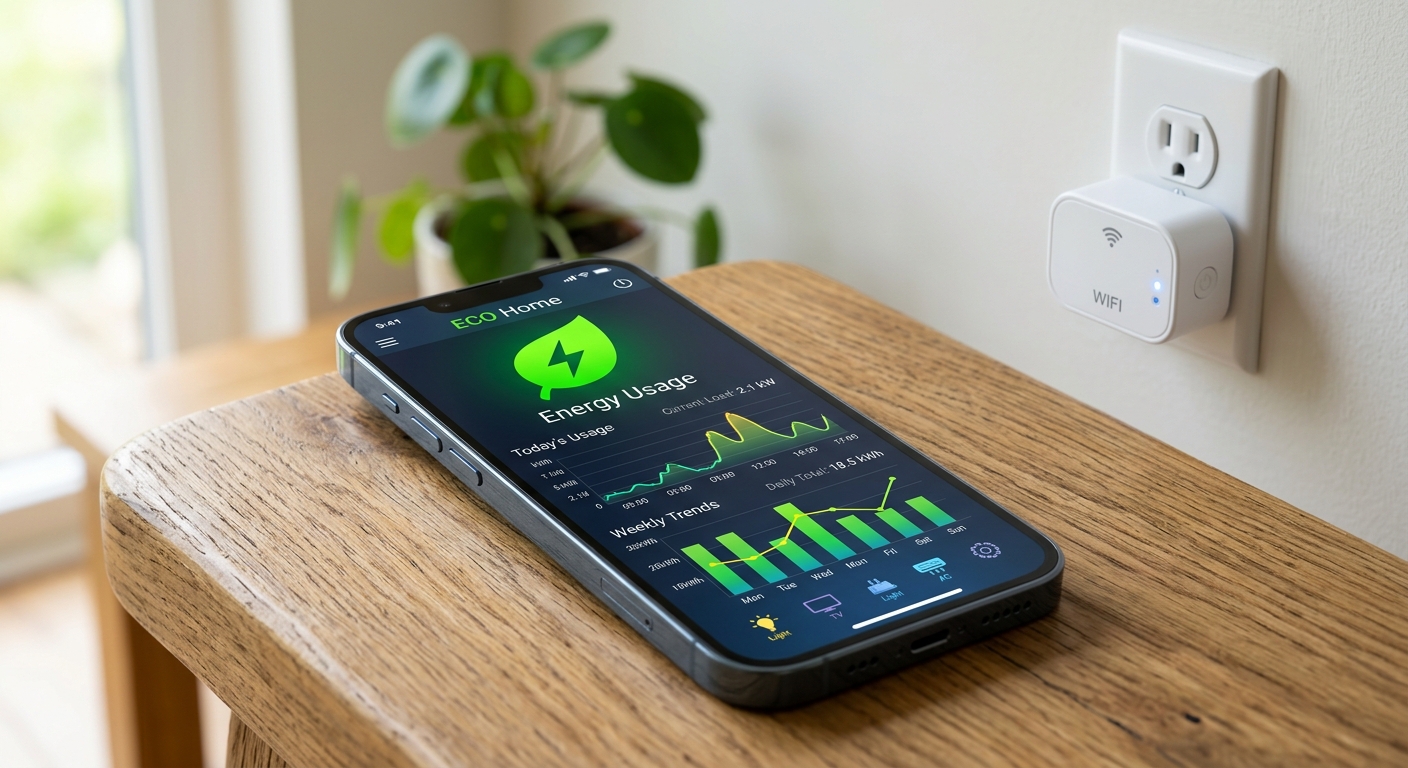
- Use Energy Monitoring Plugs: Some advanced smart plugs come with built-in energy monitoring. These allow you to see exactly how many kilowatt-hours an appliance is using via the companion app, helping you identify which devices cost you the most money.
- Create “Away” Routines: Set up a routine in your Google Home or Amazon Alexa app so that saying “I’m leaving” instantly shuts off all smart plugs, smart switches, and smart lights in the house.
- Group Appliances Sensibly: Use a smart extension cord to group your television, soundbar, and gaming console together so you can shut down the entire entertainment ecosystem with one digital command.
Conclusion
Smart home devices are far more than just convenient gadgets; they are powerful tools for energy management. By eliminating phantom power, optimizing your lighting schedules, and taking control of energy-hungry appliances, you can create a highly efficient, eco-friendly home. The initial investment in smart plugs and switches often pays for itself within the first year through noticeable reductions in your monthly utility bills.