

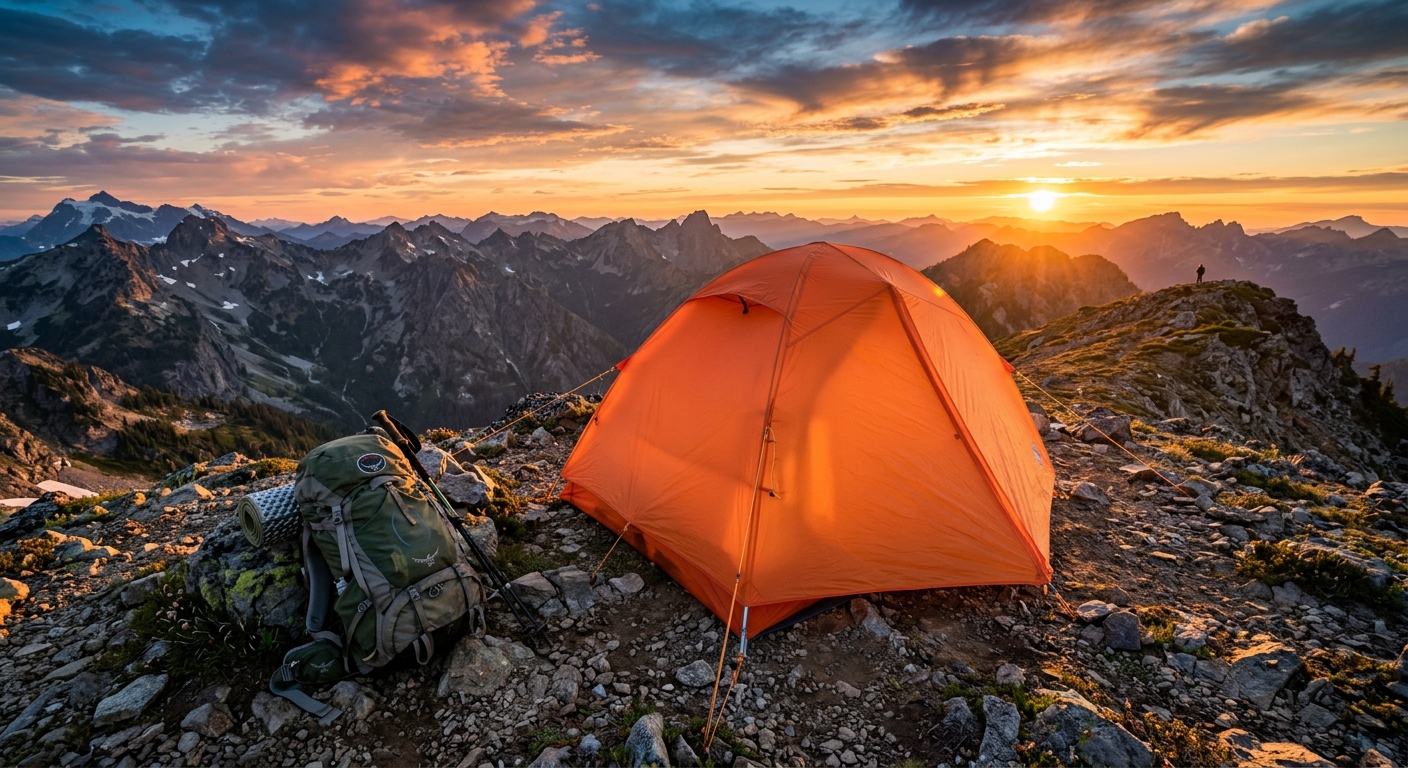
Solo backpacking offers an unmatched sense of freedom and deep connection with nature. However, it also means you are entirely responsible for carrying all your survival gear on your own back. When you do not have a partner to split the weight of group gear, every single ounce counts. Your tent is usually one of the “Big Three” heaviest items in your pack (along with your sleep system and backpack).
Choosing the perfect lightweight tent for solo trips requires a delicate balance between weight reduction, weather protection, and internal livability. In this comprehensive buying guide, we will explore the critical features you must consider before purchasing a solo backpacking tent.
1. Understanding Tent Weight Specifications
When shopping for a backpacking tent, you will notice brands list multiple different weights. Understanding these terms is crucial to avoid carrying more weight than you expected:
- Packaged Weight: This is the total weight of everything you buy in the box, including the tent body, rainfly, poles, stakes, guylines, stuff sacks, and manuals.
- Trail Weight (or Minimum Weight): This refers only to the essential components needed to set up the tent: the tent body, the rainfly, and the poles. It excludes the stakes and stuff sacks.
For solo backpacking, you generally want to aim for a trail weight of under 3 pounds (1.36 kg). Ultralight enthusiasts often seek out tents that weigh less than 2 pounds, though these come at a much higher price point and use highly specialized, fragile fabrics.
2. Freestanding vs. Non-Freestanding Tents
The structure of your tent dictates how easy it is to set up, especially after a long, exhausting day of hiking.
Freestanding Tents: These tents come with a dedicated pole system and can stand up on their own without needing to be staked into the ground. They are incredibly easy to set up, which is ideal for beginners, and they can be pitched on solid rock or wooden platforms. However, the included poles add extra weight to your pack.
Non-Freestanding (Trekking Pole) Tents: These tents do not come with standard tent poles. Instead, they use your existing hiking trekking poles for structural support and must be securely staked into the ground to remain upright. Because they eliminate the tent poles, they are significantly lighter, making them the top choice for ultralight backpackers.
3. Livability: 1-Person vs. 2-Person Tents for Solo Trips
A common dilemma for solo hikers is deciding whether to buy a strictly 1-person (1P) tent or size up to a 2-person (2P) tent.
A 1P tent will always be lighter and pack down smaller. However, the interior space can feel like a coffin, leaving little room to sit up or store your gear inside during a rainstorm. Many experienced solo backpackers actually prefer to carry a lightweight 2P tent. The minor weight penalty (usually just a few extra ounces) provides vastly more floor space, allowing you to bring your backpack inside and sleep much more comfortably.
4. Pre-Trip Gear Preparation at Home
Successful backpacking starts long before you hit the trail. Maintaining your gear at home is essential for extending the life of your expensive lightweight tent. After a trip, your tent must be cleaned, dried, and stored loosely rather than compressed.
If you are building a dedicated gear room or organizing your garage to prep your outdoor equipment, having a well-lit and fully powered workspace makes repairing gear and charging GPS devices much easier. Consider upgrading your garage or gear room with modern Wall Sockets & Switches that include built-in USB ports. This allows you to easily plug in headlamps, power banks, and satellite communicators for charging without hunting for charging blocks before a big trip.
5. Weather Resistance and Seasonality
Always match your tent to the environment you plan to hike in. Most backpackers need a 3-season tent, designed for spring, summer, and fall. These tents feature large amounts of mesh on the inner body for excellent ventilation to prevent condensation, paired with a fully waterproof rainfly.
If you plan to camp in heavy snow or extreme winds, you will need a 4-season tent. These are built with solid fabric walls instead of mesh to trap heat and block wind, and they feature stronger pole structures to support the weight of snow. Keep in mind that 4-season tents are significantly heavier and often too hot for summer camping.
Final Verdict
Your shelter is your primary line of defense against the elements in the backcountry. When selecting a lightweight tent for solo trips, prioritize a low trail weight, decide between the convenience of freestanding models or the weight savings of trekking pole tents, and seriously consider the extra comfort of a 2-person model. By making an informed choice, you will sleep better on the trail and enjoy your outdoor adventures safely.