

For a long time, the concept of a “smart home” felt like something out of a science fiction movie—a luxury reserved only for the wealthy or the extremely tech-savvy. However, in recent years, home automation has evolved rapidly. Today, transforming your standard living space into an intelligent, responsive environment is not only easy but also highly affordable.
If you have been wondering how to build a smart home on a budget without getting overwhelmed by complex wiring or expensive hubs, you are in the right place. This ultimate beginner’s guide will walk you through the most cost-effective strategies to automate your home, step by step.
1. Start with a Strong Foundation: Your Wi-Fi Network
Before buying any smart gadgets, you must ensure that your home Wi-Fi network is up to the task. The vast majority of affordable smart home devices operate on a 2.4 GHz Wi-Fi band because it offers a longer range and better wall penetration than the 5 GHz band.
You don’t necessarily need to upgrade to a premium router right away, but you should ensure that your Wi-Fi signal reaches the rooms where you plan to install your devices. If you have “dead zones” in your house, a simple Wi-Fi extender might be the most important first investment you make.
2. The Magic of Smart Plugs (Your Best First Investment)
If there is one secret to building a smart home on a tight budget, it is this: you don’t need to buy smart appliances; you just need to make your existing appliances smart.
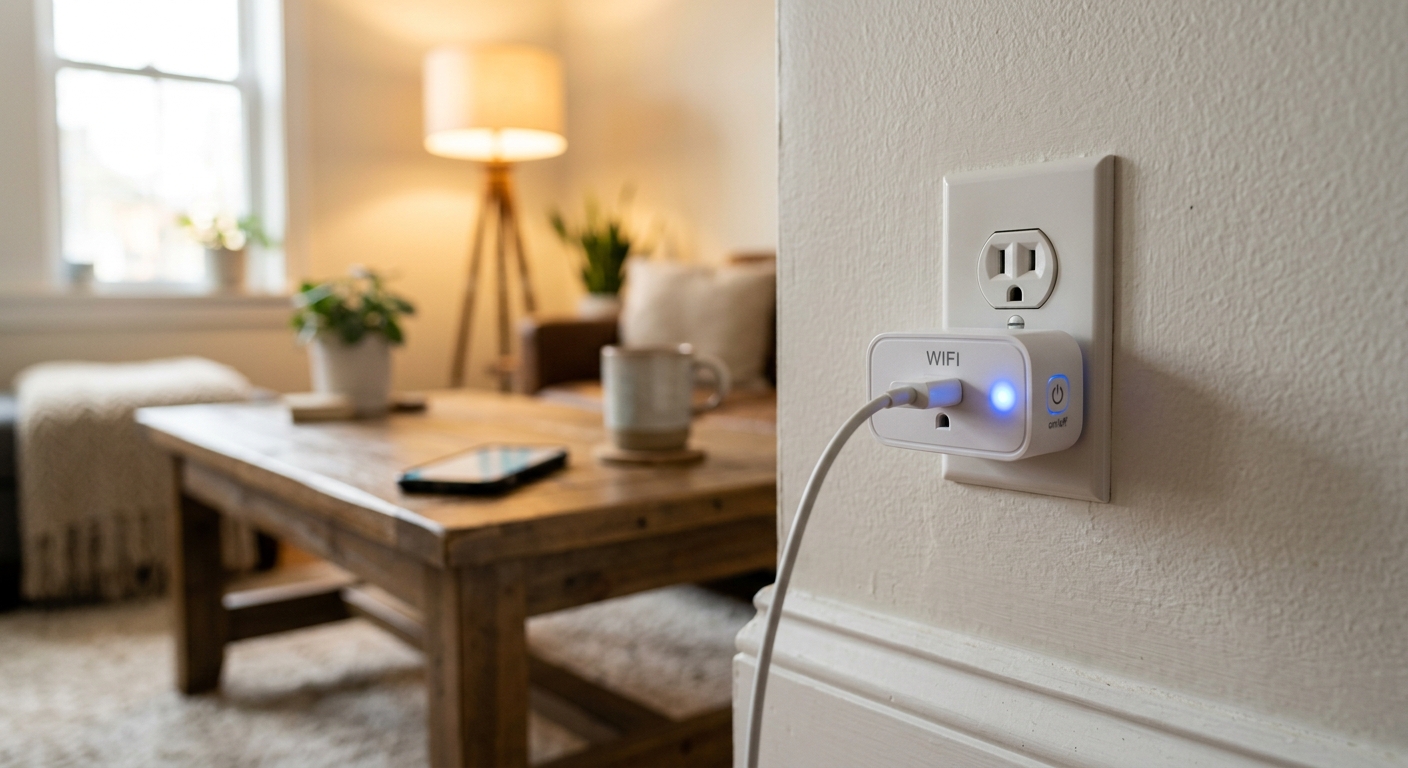
Smart plugs are incredibly affordable adapters that plug into your standard wall sockets. You then plug your “dumb” appliances—like lamps, fans, coffee makers, or space heaters—into the smart plug. This instantly connects the appliance to your Wi-Fi network, allowing you to:
- Control devices remotely: Turn off the iron you forgot about from your smartphone.
- Set schedules: Have your coffee maker start brewing at 7:00 AM every morning.
- Use voice commands: Turn off the living room lights without leaving the couch.
By purchasing a 4-pack of smart plugs, you can automate a significant portion of your daily routine for less than the cost of dinner at a restaurant.
3. Automate Your Lighting Intelligently
Lighting is usually the next step for smart home beginners. There are two main budget-friendly ways to tackle this:
Smart Bulbs vs. Smart Switches
Smart Bulbs: These are easy to install (just screw them in) and often offer color-changing capabilities. They are perfect for standalone lamps or renters who cannot change the electrical wiring of their apartment.
Smart Wall Switches: If you own your home, replacing your traditional wall switch with a Wi-Fi-enabled smart switch is incredibly cost-effective. Instead of buying four expensive smart bulbs for a ceiling fixture, you only need one smart switch to control all four standard bulbs simultaneously. It keeps the cost down and provides a cleaner setup.
4. Centralize Control with a Voice Assistant
To truly experience the magic of a smart home, you want your devices to work together effortlessly. While you can control everything via multiple apps on your smartphone, using a centralized voice assistant like Amazon Alexa or Google Assistant takes the experience to the next level.
You don’t need to spend hundreds of dollars on a high-end smart display. Entry-level smart speakers, like the Amazon Echo Dot or Google Nest Mini, are very affordable. Once set up, you can link your smart plugs and switches to the assistant. Simply saying, “Goodnight,” can automatically lock the doors, turn off all the smart plugs, and switch off the lights.
5. Smart Tips to Save Even More Money
Building your automated ecosystem doesn’t have to break the bank if you shop strategically. Keep these tips in mind:
- Buy in Bundles: Manufacturers often sell smart plugs and wall adapters in 2-packs or 4-packs at a significantly reduced per-unit cost.
- Look for Hub-Free Devices: Avoid ecosystems that require you to buy an expensive central “Hub.” Look for devices that connect directly to your Wi-Fi router.
- Start Room by Room: Don’t try to automate your entire house in one weekend. Start with the living room or bedroom. Once you understand what works best for your lifestyle, you can expand to the kitchen and outdoors.
- Focus on Energy Savings: Devices like smart plugs and smart thermostats can actually pay for themselves over time by automatically turning off appliances when they are not in use, thus lowering your monthly electricity bill.
Conclusion
Building a smart home on a budget is completely achievable if you take a strategic approach. By ensuring your Wi-Fi is reliable, investing in affordable smart plugs, and prioritizing practical automation over flashy gadgets, you can create a highly efficient home without a massive financial investment.
Start small, experiment with scheduling your lights and morning coffee, and enjoy the convenience of modern home automation!