

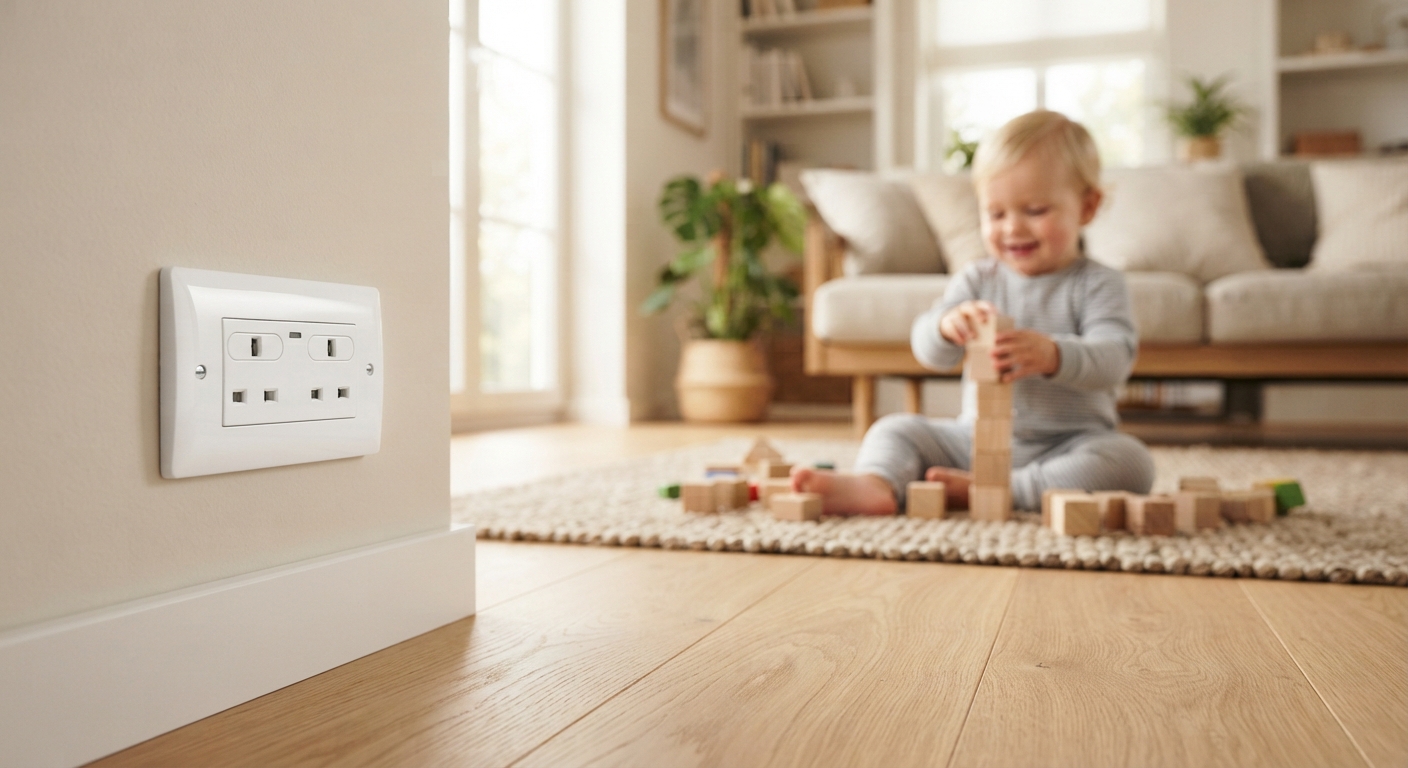
Babies and toddlers explore the world with their hands and mouths, making the lower half of your walls a highly dangerous environment. Electrical outlets, which are installed exactly at a crawling child’s eye level, naturally attract small fingers and foreign objects.
Relying on outdated methods to secure your electrical system can leave hidden vulnerabilities. This comprehensive guide details the most effective, modern strategies to completely childproof your power sources and prevent tragic electrical accidents at home.
1. The Hidden Danger of Plastic Outlet Caps
For decades, parents have relied on small, removable plastic outlet caps to plug empty sockets. While these caps are cheap and widely available, they introduce a severe secondary hazard. A determined toddler can easily pry these plastic covers out of the wall, instantly transforming a shock hazard into a life-threatening choking hazard.
Furthermore, adults often forget to replace these caps after vacuuming or charging a device, leaving the outlet entirely exposed. Safety experts now strongly advise against using removable plastic caps in homes with infants and toddlers.
2. Upgrading to Tamper-Resistant Receptacles (TRRs)
The most permanent and foolproof method for protecting children from electrocution is physically upgrading your wall hardware. Tamper-Resistant Receptacles (TRRs) feature built-in, spring-loaded shutters that block the electrical contacts.
These internal shutters will only open when the two metal prongs of a legitimate plug are inserted simultaneously with equal pressure. If a child attempts to insert a key, a hairpin, or a paperclip into one side of the slot, the shutter remains securely locked. By replacing your outdated receptacles with modern Wall Sockets & Switches featuring TRR technology, you eliminate both shock and choking hazards in one step.
3. Securing Long Cords and Cables
Exposed charging cables and lamp cords represent a dual threat: children can chew on them to reach live wires, or they can pull them, bringing heavy appliances (like televisions or lamps) crashing down on their heads. Cord management is an essential pillar of a childproofed home.
Use rigid plastic cord concealers to route necessary wires securely along the baseboards, out of sight and out of reach. For excess slack behind furniture, utilize zip ties or cable sleeves to bundle the wires tightly together. Never run cords under rugs, as a crawling child will inevitably investigate the strange bump on the floor.
4. Managing Power Strips and Surge Protectors
A power strip sitting on the floor is a massive temptation for a curious toddler. It features multiple exposed slots and a glowing red switch that looks exactly like a toy. Leaving a power strip exposed in a playroom or nursery is highly dangerous.
To neutralize this risk, purchase dedicated power strip safety covers. These hard plastic boxes enclose the entire surge protector and the plugged-in cords, allowing the cables to exit through small, child-proof slots. Alternatively, mount the power strip securely to the underside of a desk or high on a wall, completely out of a child’s vertical reach.
5. Establishing Clear Safety Boundaries
Physical barriers must be reinforced with education. As your child transitions from a toddler to a preschooler, begin teaching them about the invisible dangers of electricity. Use simple, firm language to explain that outlets and cords are not toys and should never be touched.
Lead by example. Do not unplug devices by yanking the cord from a distance, and never handle electronics with wet hands in front of your children. Consistent education builds a lifelong foundation for electrical safety.
Securing Your Family’s Environment
Childproofing your electrical system requires a proactive approach and a small investment in modern safety technology. By moving away from dangerous plastic caps, hiding loose cords, and upgrading your hardware to tamper-resistant standards, you create a genuinely safe environment where your child can explore without risk.